
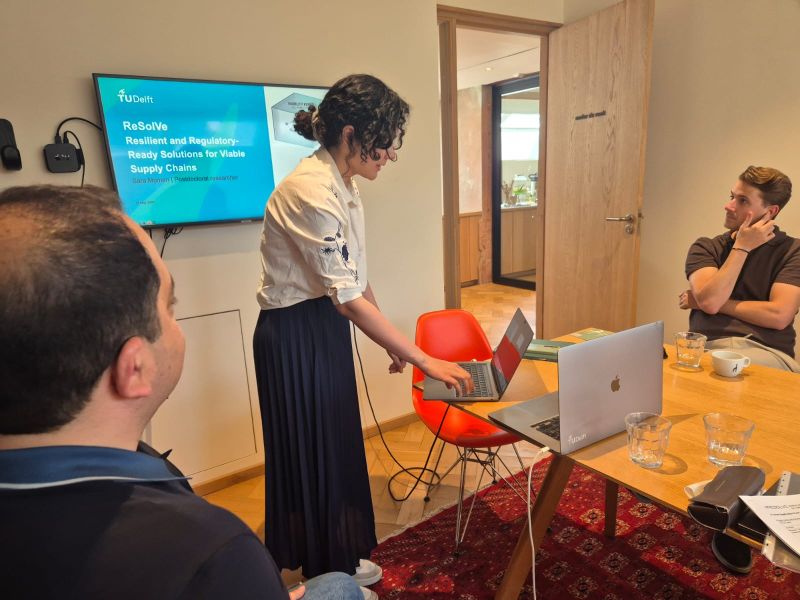
The ReSolVe team met to discuss how supply chains can remain viable as their operating conditions change. The session brought together perspectives on long-term planning, regulation and trade uncertainty.
Research discussion
Sara Momen introduced viability theory: a way of examining whether a supply chain can continue to operate within a feasible set of conditions. Her presentation considered how that feasibility can change before immediate performance problems become visible.
Patrick Stokkink discussed the changing regulatory landscape, including carbon-border measures, due-diligence requirements and critical-materials rules. The discussion focused on what these developments mean for future supply-chain choices.
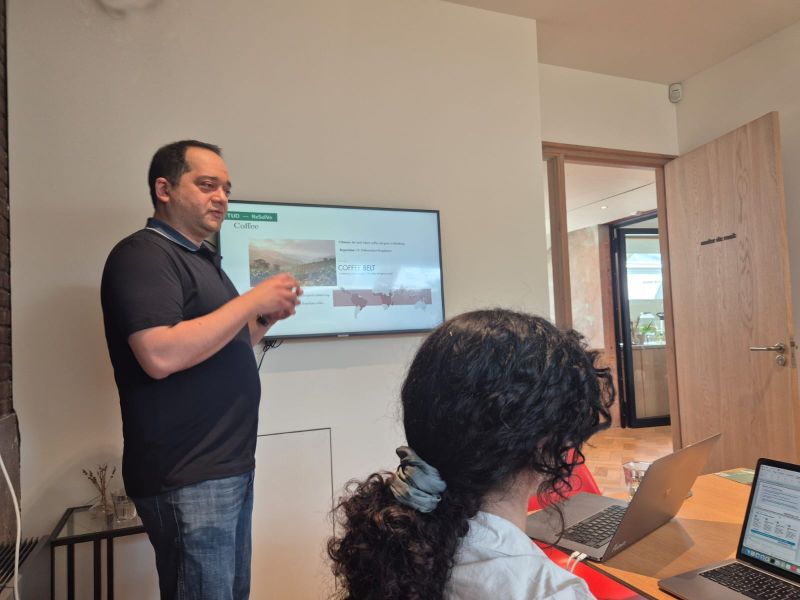
Silvester den Boer explored tariff uncertainty and its implications for production networks. His contribution considered how exposure builds across production stages and how network design influences the ability to respond.
Next steps
The session helped connect these research perspectives around a shared question: how can organisations assess whether their supply chains remain viable over time? ReSolVe is funded by TKI Dinalog.
Source: Yousef Maknoon on LinkedIn ↗